
Teeth Whitening Services
Individual suitability, careful preparation, comfort checks and responsible maintenance.
Services shaped around individual smiles

Teeth Whitening services work best when the starting point is the person, not a standard promise. The colour of natural teeth, the condition of the gums, previous dental work, daily habits and any history of sensitivity all influence whether whitening is appropriate and how it should be planned. A careful service therefore begins with questions, an oral-health review and an explanation of realistic possibilities.
The aim is not to create an artificial shade or to chase a result that ignores comfort. It is to understand what has changed, which teeth are visible when the person smiles, and what improvement would look balanced with the face and existing restorations. This makes the service easier to understand and supports informed consent.
The consultation as a working conversation
A useful consultation gathers information and gives it context. Recent dental treatment, current discomfort, visible restorations, pregnancy or breastfeeding, age, staining habits and previous whitening attempts may all matter. The person should also be able to describe what they hope will look different and why the timing matters.
Practical questions include which teeth are expected to respond, how the starting shade will be recorded, what comfort checks are used, what to do if sensitivity develops and when the outcome will be reviewed. Written instructions reduce the temptation to improvise or use more product than advised.
A website cannot decide suitability. Pain, untreated decay, gum disease, cracked teeth, leaking restorations or unexplained colour changes need an individual dental assessment before cosmetic whitening is considered. Existing crowns, veneers, bridges and tooth-coloured fillings do not whiten like natural enamel.
The consultation connects assessment with preparation. When the cause of discolouration and the condition of the mouth are understood, the service can move forward at a pace that protects oral health and keeps expectations realistic.
Understanding everyday discolouration

Natural tooth colour varies, and gradual darkening can reflect more than one process. Tea, coffee, red wine, tobacco and strongly coloured foods can contribute to surface staining. Age-related changes, thinning enamel and the underlying dentine can also affect how warm or yellow teeth appear.
Keeping a short record of frequent drinks, smoking or vaping patterns, brushing habits and professional cleaning can help explain why colour has changed. A professional clean may be appropriate before whitening when deposits or surface stain would make shade assessment less reliable.
Not every dark area is ordinary staining. A single tooth that changes colour, banding, white patches, trauma-related changes or colour linked to medication may respond differently. These patterns should be assessed rather than covered by a general whitening assumption.
Identifying the likely cause helps match the service to the need. It also provides a sensible aftercare plan because the habits that influenced the starting colour often influence how long the result remains visible.
Teeth Whitening for younger adults
Younger adults may want a brighter smile for photographs, work, social confidence or a special occasion. The responsible starting point is age, oral development and dental health, not speed. A natural-looking refresh usually suits facial features better than an extreme target shade.
Planning should include enough time for assessment, treatment, rehydration and review before an event. Daily brushing with fluoride toothpaste, cleaning between teeth and addressing any gum bleeding are more important than accelerating a cosmetic schedule.
Whitening is not automatically suitable because someone feels self-conscious. Legal and professional restrictions apply to younger people, and an individual assessment is essential. Existing enamel differences, braces, retainers or restorations can affect timing and the evenness of the outcome.
A calm explanation helps younger adults separate social-media expectations from realistic change. The service should support confidence while making clear that healthy teeth naturally show variation in shade and translucency.
Tea and coffee drinkers
Tea and coffee contain coloured compounds that can contribute to gradual surface staining, especially when drinks are sipped repeatedly across the day. Frequency of contact can matter as much as the number of cups because the mouth has less time to clear pigments between drinks.
Useful habits include drinking water afterwards, avoiding prolonged swishing, maintaining regular cleaning and allowing saliva time to recover. Waiting before brushing after acidic drinks can protect softened enamel. A straw may reduce front-tooth contact for suitable cold drinks, but it is not practical for every beverage.
A person does not need to remove every enjoyable drink to consider Teeth Whitening. Overly restrictive advice is hard to maintain. The plan should instead identify realistic changes and explain that continued exposure may mean colour returns sooner and maintenance needs vary.
Linking treatment with sustainable habits turns whitening into part of oral care rather than a one-off event. The Result page explains how shade change can be reviewed consistently, while the Price page sets out the verified reference options.
Sensitive teeth and careful planning

Sensitivity can feel like a short, sharp response to cold, sweetness, touch or air. It may be linked to exposed dentine, gum recession, enamel wear, cracks, decay or recent dental work. Anyone who already experiences discomfort should learn more about Teeth Whitening for Sensitive Teeth and arrange an individual assessment before beginning treatment. Understanding when sensitivity occurs and how long it lasts helps distinguish a familiar pattern from a concern requiring professional attention.
A careful service may use desensitising toothpaste before treatment, a conservative product concentration, shorter exposure, rest days or a revised schedule. The person should know how to record symptoms and when to pause. Comfort is an outcome to monitor, not an obstacle to ignore.
Whitening can cause temporary sensitivity even in people without a previous history. Severe, persistent or localised pain is not something to push through. Changing the amount or frequency without advice can increase irritation without improving the final result.
Sensitivity planning should continue into aftercare. Mild foods and drinks, avoiding temperature extremes for a short period and following professional instructions can make the stabilisation phase easier.
Existing dental restorations
Crowns, veneers, bridges, bonding and tooth-coloured fillings are manufactured to a selected shade. Whitening products act on natural tooth structure and do not predictably lighten these materials, which means a previously well-matched restoration may look different after surrounding teeth brighten.
A shade map can record where restorations sit within the smile. When they are highly visible, the sequence of whitening and any future restorative discussion matters. The natural teeth should normally stabilise before a professional judges whether a colour mismatch remains significant.
Restorations should never be promised to change through whitening. Replacement is a separate clinical and financial decision and may not be necessary. The condition, function and age of existing work carry more weight than colour alone.
Explaining this early prevents surprise. It also supports a more conservative plan, because the goal becomes harmony across the smile rather than the lightest possible natural-tooth shade.
Preparation before treatment

Preparation makes the starting assessment more dependable. Teeth and gums should be comfortable, oral hygiene should be stable, and any recommended cleaning or treatment should be completed first. A baseline shade record and consistent photographs can help later review.
Before an appointment, the person can list medications, recent treatment, sensitivity triggers and previous whitening products. They can also bring retainers or appliances if asked. Following ordinary oral hygiene is usually more useful than using abrasive products to make teeth look temporarily brighter.
Preparation should not include unverified home remedies, extra-strength gels or aggressive scrubbing. These can irritate tissues, increase sensitivity and make it harder to understand the true starting condition.
A prepared appointment allows more time for explanation and less time resolving avoidable uncertainty. It helps the person recognise each stage and know what information should be supplied before consent.
A structured professional session
A structured session normally follows a sequence: confirm the plan, review the mouth, record the baseline, protect soft tissues, apply the professional system as directed, monitor comfort and reassess at the end. The exact method and timing depend on the chosen protocol and the individual.
During the session, communication should remain possible. The person should know how to signal discomfort and should receive simple updates about what is happening. Protective measures are checked rather than assumed, especially around the gum margin and lips.
No device or light makes every tooth respond identically. Descriptions such as instant or guaranteed should be treated cautiously because starting shade, stain type, enamel thickness and hydration all affect the visible change.
The session is one part of the service. Assessment before it and stabilisation after it are equally important to a result that feels controlled rather than rushed.
Gum comfort and soft-tissue care
Whitening material is intended for the tooth surface, not prolonged contact with gums, lips or cheeks. Custom fit, careful placement and protective barriers reduce the chance of temporary blanching or irritation. Soft-tissue comfort should be checked throughout.
If a tray is used, the person should understand how much material is needed and how to remove excess. More gel does not mean a better result. It is more likely to escape the tray and irritate surrounding tissues.
Persistent soreness, swelling, ulcers or bleeding require professional advice. Cosmetic treatment should pause while an unexpected reaction is assessed. People should not attempt to neutralise irritation with unverified substances.
Good soft-tissue care supports consistency. A comfortable person is better able to follow the schedule accurately, while a poorly fitting method encourages interruptions and improvised adjustments.
Daily life during a whitening course
A home element, when professionally supplied, must fit around real routines. The schedule should state when to wear trays, how to clean and store them, how to manage missed sessions and what to do if sensitivity appears. Simplicity improves adherence.
It helps to choose a predictable time, keep the supplied materials together and record each application. Oral hygiene should remain gentle and consistent. Food and drink guidance should be practical rather than so restrictive that it cannot be followed.
Doubling a session after forgetting one, sleeping in trays not intended for overnight use or adding unrelated whitening products can change exposure and comfort. The safest response to a missed step is to return to the agreed plan or ask for advice.
Daily routine is where professional instructions become real behaviour. Clear limits make it easier to achieve gradual, even change without turning the process into a competition with the shade guide.
Monitoring progress without overreacting
Teeth may look different under bathroom lights, daylight, phone flash and warm indoor lighting. Dehydration immediately after a session can also make them appear temporarily lighter. Consistent viewing conditions make progress easier to judge.
Use the same location, neutral lighting, camera distance and relaxed expression for comparison photographs. Look at the whole smile rather than one reflective edge. A professional shade guide provides context but is not a promise of a particular number of steps.
Checking repeatedly during the day can magnify minor variation and lead to unnecessary extra treatment. The stable result is better reviewed after teeth have rehydrated and the planned course is complete.
Measured monitoring protects both expectations and enamel. It supports a decision based on a stable pattern rather than a single photograph or a dramatic change in lighting.
Aftercare during the stabilisation period
After whitening, mild short-lived sensitivity can occur and the apparent shade may settle as teeth rehydrate. Following the supplied instructions, using recommended desensitising care and avoiding obvious triggers for a short time can support comfort.
Water, gentle oral hygiene and ordinary balanced meals are practical foundations. Strongly coloured foods and drinks may be limited during the initial period if advised. Rinsing with water after staining drinks is often easier to maintain than brushing immediately.
Aftercare should not rely on harsh whitening toothpaste, acidic recipes or repeated top-ups. Abrasive products can remove surface stain but may also increase wear when overused. Any unexpected or persistent symptom should be assessed.
The stabilisation phase bridges treatment and maintenance. It gives the person a more reliable view of the result and allows a review to focus on lasting change rather than temporary dehydration.
Long-term stain management
The durability of a brighter shade depends on oral hygiene, diet, smoking, professional cleaning and the natural ageing of teeth. Maintenance works best as a set of modest repeated habits rather than occasional intensive correction.
Brush twice daily with fluoride toothpaste, clean between teeth, attend routine dental care and manage frequent staining exposures. Drinking water and avoiding prolonged sipping can be useful. Professional cleaning may remove surface deposits that whitening alone does not address.
No maintenance plan keeps teeth permanently unchanged. Natural teeth continue to interact with foods, drinks and time. Touch-ups should be based on review and professional guidance, not a fixed assumption that everyone needs the same frequency.
A realistic maintenance plan protects the value of the original service. It also keeps cosmetic goals connected to long-term oral health rather than separating appearance from everyday care.
When to pause and seek advice

A safe service gives clear stopping rules. New pain, persistent sensitivity, gum injury, swelling, a cracked tooth, a loose restoration or a single tooth changing colour are reasons to pause and request an assessment.
The person should know whom to contact through the channel supplied by their treating professional and what details to report: location, trigger, duration, severity, visible changes and the last application. Accurate information supports faster, safer advice.
Continuing because a course is nearly finished can turn a minor issue into a larger one. Cosmetic timing should never take priority over unexplained symptoms or the health of the teeth and gums.
Stopping is not failure. It is part of responsible monitoring and allows the plan to be adjusted, delayed or discontinued according to what the mouth needs.
Reviewing the service and future needs
A review compares the stable outcome with the original record and, more importantly, with the person’s goals and comfort. It can consider shade balance, visible restorations, sensitivity, habit changes and whether further action is actually useful.
Useful review questions include whether the change looks natural in ordinary light, whether the person followed the plan comfortably, which habits may affect durability and what maintenance interval is proportionate. Photographs should be interpreted with consistent lighting.
More treatment is not automatically better. Once a balanced result is reached, additional exposure may add sensitivity without a meaningful aesthetic benefit. Future restorative changes should be considered separately.
Review completes the service as a carefully managed sequence of decisions. It should consider the settled shade, overall comfort, visible restorations and whether the original goal has been achieved. The Why Choose Teeth Whitening page provides further information about the standards and approach used to support responsible, individually planned care.
A responsible summary
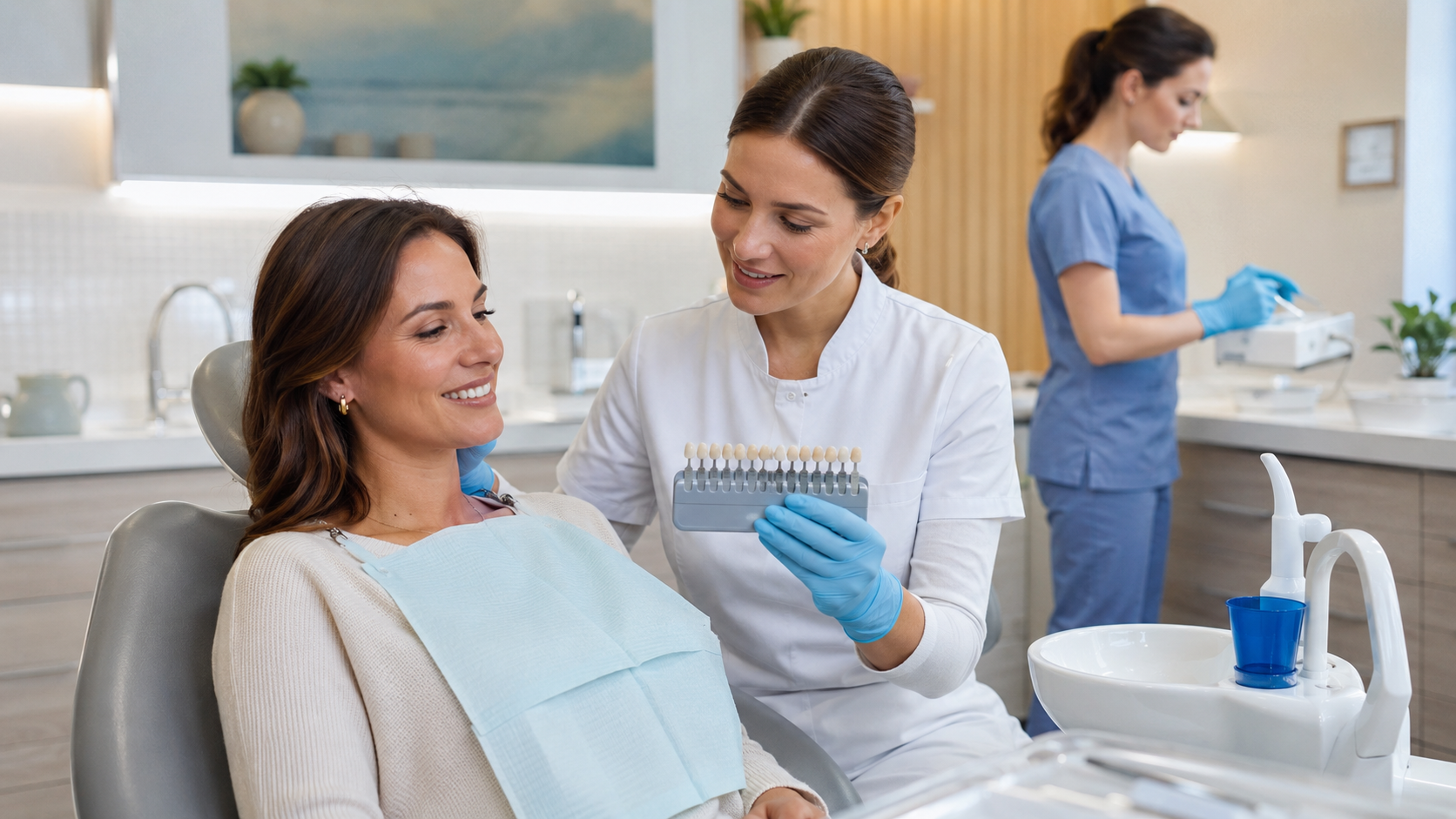
Teeth Whitening services should combine individual assessment, clear explanation, controlled application, comfort monitoring and realistic maintenance. Each stage produces information for the next and keeps oral health central.
People can support the process by sharing an accurate history, asking practical questions, following the agreed schedule and reporting changes early. These behaviours matter as much as the treatment system itself.
No website can promise suitability, a particular number of shades or a permanent result. Natural variation, restoration colour and lifestyle mean that outcomes differ. Professional assessment remains the appropriate basis for a decision.
A balanced service does not try to change the person behind the smile. It aims for a brighter, natural-looking result that can be maintained responsibly and understood clearly.
Detailed service questions
How does Teeth Whitening differ from professional cleaning?
Professional cleaning is intended to remove plaque, calculus and some surface deposits, supporting gum and tooth health. Teeth Whitening uses an assessed whitening system to lighten colour within natural tooth structure. Cleaning may improve brightness where surface stain is important, but it does not create the same chemical colour change. A professional may recommend cleaning before shade recording so the baseline is accurate. The two services have different purposes and neither should be assumed to replace the other.
Can every tooth be expected to respond in the same way?
No. Teeth differ in enamel thickness, underlying dentine, stain cause, age, previous trauma and surface characteristics. Canines may remain slightly warmer than incisors, and translucent edges can reflect surrounding colour. Crowns, veneers, bridges, bonding and fillings do not whiten predictably. A responsible service records these differences before treatment and reviews the whole smile afterwards. The aim is balanced improvement, not forcing every visible area to match one artificial shade.
What information should be shared at the assessment?
Share current pain, sensitivity triggers, gum bleeding, recent dental treatment, visible restorations, retainers or appliances, previous whitening products and any unusual colour change. Relevant medical information, pregnancy or breastfeeding and medicines should be discussed through the appropriate confidential process. It is also helpful to explain daily tea, coffee, tobacco and oral-hygiene habits. Honest information allows the professional to decide whether whitening is suitable and which pace is proportionate.
Why can a special occasion affect planning?
An event creates a deadline, but the mouth still needs time for assessment, treatment, possible rest days, rehydration and review. Starting too late can encourage an unnecessarily aggressive schedule or leave no room to address sensitivity. Early planning allows a conservative course and a more reliable view of the settled shade. If oral-health concerns are found, treatment may need to be delayed regardless of the event date.
What happens if a home session is missed?
The safest general response is not to double the next session. Return to the written schedule or ask the treating professional how to continue. Doubling exposure can increase sensitivity and gum irritation without producing a proportionate benefit. A useful plan explains missed sessions in advance, including when a longer interruption means the course should be reviewed. Keep a simple record so the actual exposure can be discussed accurately.
How should whitening trays be cared for?
Follow the instructions supplied with the specific tray system. In general, trays should be cleaned gently with cool or lukewarm water, allowed to dry and stored safely away from heat, pets and children. Hot water can distort some materials. Abrasive cleaners may roughen the surface. Fit should be checked after dental work or tooth movement, and a damaged or poorly fitting tray should not be used until reviewed.
Is temporary sensitivity always the same?
No. Some people notice brief generalised zings, while others experience a localised or longer-lasting response. The trigger, severity, location and duration matter. Mild short-lived sensitivity may be managed within the professional plan, but severe, persistent or one-tooth pain needs assessment. A clear symptom record is more useful than simply saying the teeth are sensitive, because it helps distinguish an expected temporary effect from another dental concern.
Why is more whitening gel not better?
Whitening material works at an appropriate controlled exposure. Excess gel is more likely to escape onto gums and other soft tissues, increasing irritation, while adding little useful tooth contact. In a tray, only the instructed amount should be used and visible excess should be removed as directed. The same principle applies to frequency and duration: increasing any one factor without advice can raise risk without improving the settled result.
When should results be reviewed?
Immediate chairside colour can be affected by dehydration, so a stable review is usually more meaningful after the teeth have rehydrated and any temporary sensitivity has settled. The exact interval depends on the protocol. Use consistent lighting and compare with the original record. A review should consider comfort, restorations and whether the personal goal has been met, not only a shade number.
Can Teeth Whitening remove every kind of discolouration?
No. It commonly addresses colour in natural teeth and can improve many lifestyle-related stains, but trauma-related changes, developmental conditions, medication-linked colour, banding and a single dark tooth may behave differently. Surface deposits may respond better to cleaning, while restorations retain their shade. Individual diagnosis prevents a general whitening service from being applied to a condition that needs a different approach.
How often should a touch-up be used?
There is no universal interval. Need depends on the stable result, staining habits, oral hygiene, cleaning, sensitivity and changes in dental health. A later professional review can determine whether a touch-up, cleaning or no treatment is appropriate. Automatic frequent exposure is not responsible maintenance. Existing trays and stored products should be checked for fit, condition and suitability before reuse.
What makes service instructions trustworthy?
Trustworthy instructions are specific to the supplied system and the individual plan. They state amount, timing, frequency, storage, cleaning, missed-session guidance, common temporary effects and clear stopping rules. Spoken and written advice should agree. Instructions should not rely on vague phrases such as use until white enough, because that transfers a clinical decision to guesswork and can encourage overuse.
Coordinating whitening with routine dental care

Teeth Whitening sits within ongoing oral care rather than replacing it. Routine examinations, gum-health review, professional cleaning where indicated and the repair of active problems provide the stable foundation on which a cosmetic plan can be considered.
The person should tell both the whitening provider and their regular dental professional about relevant current care, especially recent fillings, planned restorations, orthodontic movement or symptoms that have not been assessed.
Cosmetic timing should not interrupt necessary treatment or encourage someone to hide pain behind a colour goal. Whitening may need to wait until the mouth is stable and any new restoration sequence has been planned.
Coordination avoids duplicated work and supports a shade that relates sensibly to future dental care. It keeps appearance, function and long-term health in the same decision.